Product Description
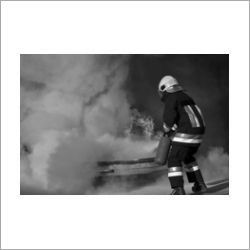
Backed with rich industry and market knowledge, we are engrossed in providing superior quality Flame Retardant Chemical. In order to suppress fire caused due to inflammable and combustible gases, the offered chemicals are used in extinguishers to create foams and gels. With the aid of our dexterous professionals, these chemicals are processed using modern methodology at spacious production cell. We ensure on-time delivery of the provided Flame Retardant Chemical in moisture proof packaging options.
Key points:- Standard shelf life
- Balanced chemical composition
- Isolate oxygen content
- Non effective on ozone layer
Specification
| GRADE | MATERIAL TO BE TREATED | APPLICATION PROCEDURE | APPLICATION RATIO |
| COT 009 | Cotton | *During Textile Processing | 300-450 gm/ltr |
| COT 009 | Treating Yarn of Capital | During Textile Processing | 200-250 gm/ltr |
| WL 099 | Wool Items | During Textile Processing | 350-400 gm/ltr |
| PC 018 | Poly Cotton | *During Textile Processing | 300-450 gm/ltr |
| POL 027 | Polyster | *During Textile Processing | 350-400 gm/ltr |
| PV 036 | Poly Viscose | *During Textile Processing | 400-450 gm/ltr |
| CF 054 | Chiffon | *During Textile Processing | 120-170 gm/ltr |
| SL 063 | Silk | *During Textile Processing | 150-200 gm/ltr |
| CP 045 | Carpet | *During Textile Processing | 15-20 ml/sq. ft. |
Our chemical additive delivers superior fire resistance for a wide range of industrial applications, including plastic molding, textile processing, paint formulations, and electrical components. Its unique formulation provides reliability without compromising product integrity, making it ideal for manufacturers seeking enhanced safety measures.
Safety and Handling ProtocolsFor safe usage, always wear protective gloves, goggles, and respirators when handling this flame retardant. Although not classified as dangerous goods under ADR/RID for transport, it may cause skin and eye irritation or be harmful if ingested. Store in a cool, dry location away from sunlight and ignition sources to maximize shelf life and performance.
Environmental Compliance and VersatilityWith a low emission profile and compatibility across multiple polymer types, this flame retardant supports environmental stewardship in manufacturing. Always consult local regulations for disposal or usage to ensure minimal ecological impact and adherence to legal standards.
FAQs of Flame Retardant Chemical:
Q: How should the flame retardant chemical be incorporated into manufacturing processes?
A: Add the flame retardant as an additive during the mixing or blending stage with polyurethanes, PVC, epoxy resins, or other polymers to achieve the desired fire resistance. Refer to recommended dosing levels based on target application and polymer compatibility.
Q: What benefits does this flame retardant offer compared to traditional compounds?
A: This product provides efficient fire resistance, superior chemical stability, and non-corrosive behavior. Its low emission profile contributes to safer work environments and compliance with environmental regulations, ensuring quality without compromising sustainability.
Q: When is it appropriate to use this chemical for fire retardancy?
A: Apply this flame retardant during manufacturing of plastics, textiles, paints, or electronic goods where enhanced fire protection is needed. It is especially valuable in applications subject to rigorous safety standards or regulatory fire safety requirements.
Q: Where is the chemical typically stored, and what precautions should be taken?
A: Store in HDPE drums or IBC containers in a cool, dry space away from direct sunlight and sources of ignition. Ensure the area is well-ventilated and that handling teams utilize appropriate protective equipment to prevent irritation and exposure.
Q: What steps should be followed for safe handling of the flame retardant chemical?
A: Wear gloves, goggles, and a respirator when dealing with the chemical to avoid skin and eye irritation or accidental ingestion. Always review the safety data sheet and hazard statement prior to use.
Q: Is the flame retardant environmentally friendly and how is it regulated?
A: It features a low emission profile and is not classified as dangerous for transport under ADR/RID. However, environmental impact varies with local regulations; always consult relevant authorities for proper disposal and use to minimize ecological effects.
Q: What is the shelf life and optimal storage conditions for this chemical?
A: The flame retardant retains its efficacy for 1224 months if kept in sealed containers under cool, dry conditions away from sunlight and heat. Regular inspection of storage facilities is advised to maintain product integrity.


 We Support 24/7 Customer Service







 Send Inquiry
 Send Inquiry
 Send SMS
 English
 Spanish
 French
 German
 Italian
 Chinese (Simplified)
 Japanese
 Korean
 Arabic
 Portuguese